Phra That Hariphunchai Temple and the Cultural Heart of Lamphun
A respectful journey through Hariphunchai history, sacred architecture, and meaningful Lamphun attractions
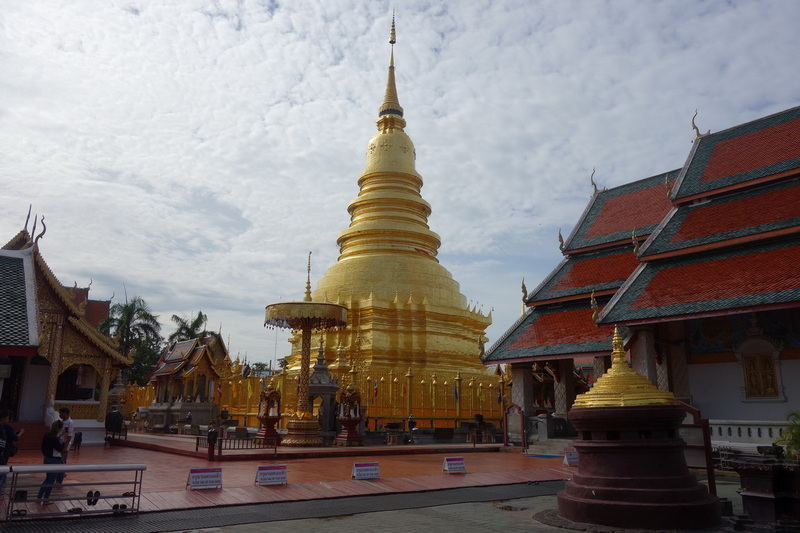
Among the Top Temples In Northern Thailand, Phra That Hariphunchai Temple holds a distinctive place in the cultural landscape of Lamphun. It is not simply a beautiful religious monument to be viewed from the outside. The temple remains an active place of Buddhist worship, local memory, and community tradition, with layers of history connected to the ancient Hariphunchai kingdom. Known by several names, including Wat Phra That Hariphunchai, Phrathat Hariphunchai, and Wat Phra That Haripunchai Woramahawihan, the temple is closely associated with Lamphun’s identity. Its central stupa, religious imagery, and surrounding buildings invite a slower kind of sightseeing: one based on observation, respect, and attention to the relationship between architecture and belief. For travelers exploring Lamphun Attractions, a visit here offers a useful introduction to the province’s history while also providing a direct encounter with living religious culture.
A Sacred Landmark of Ancient Hariphunchai
Lamphun is associated with Hariphunchai, an early northern kingdom whose cultural influence remains visible in local religious art, legends, and historic monuments. The city is traditionally linked with Queen Chamadevi, a ruler remembered in northern Thai history and regional tradition. Within this setting, Phrathat Hariphunchai developed as one of the area’s most important Buddhist sanctuaries and became a strong symbol of Lamphun’s spiritual continuity.
The temple’s history is generally described through a combination of local chronicles, religious tradition, and successive periods of restoration. As with many long-established temples in Thailand, the complex seen today represents more than one historical moment. Buildings and decorative details have been repaired, adapted, or renewed over time, while the sacred importance of the central relic stupa has continued.
This continuity explains why Wat Hariphunchai matters to both visitors and local worshippers. For travelers, it provides a tangible connection to the history of Lamphun Province. For devotees, it remains a place for prayer, merit-making, offerings, and important religious observances. The temple should therefore be understood as a living heritage site rather than a monument separated from everyday community life.
Reading the Temple Through Its Architecture
The visual focus of Wat Phrathat Hariphunchai is its principal chedi, traditionally revered as containing a Buddhist relic. Its tall form gives the complex a strong vertical centre, while layered ornament and carefully arranged details reflect the artistic vocabulary of northern Thai Buddhist architecture. The stupa is best appreciated from several viewpoints, since its proportions, base, and upper elements create different impressions as visitors move through the grounds.
The surrounding temple buildings add another layer to the experience. Rooflines, gables, columns, devotional images, and decorative surfaces show how religious architecture combines practical shelter with symbolic expression. Some details may reflect Lanna artistic traditions, while others reveal later restoration and regional interpretation. Rather than treating the complex as a single uniform design, visitors can notice how different structures contribute to an architectural conversation across time.
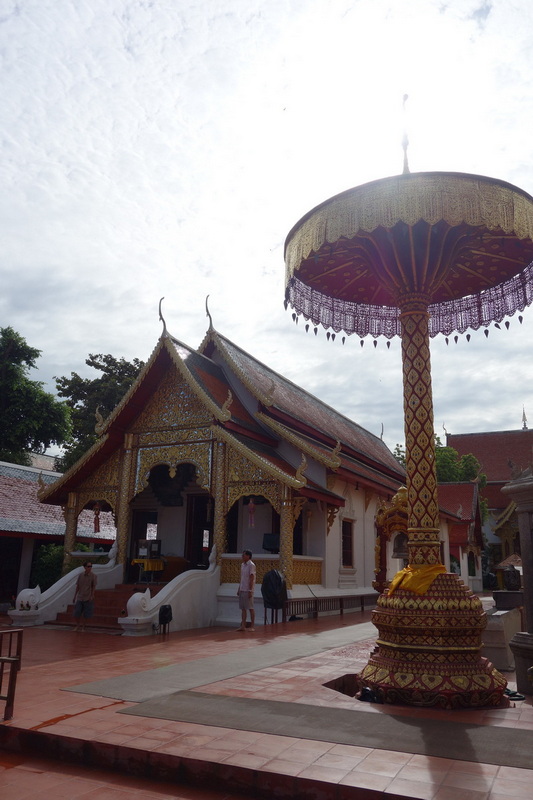
A temple visit also involves sounds, movement, and activity that are easy to overlook in a photograph. Worshippers may pause before an image, light incense where appropriate, make offerings, or sit quietly in contemplation. Monks and temple staff may be carrying out ordinary responsibilities. These everyday elements are part of the character of Hariphunchai Temple, and they remind visitors that its meaning is not limited to its most ornate features.
What a Thoughtful Visit Can Offer
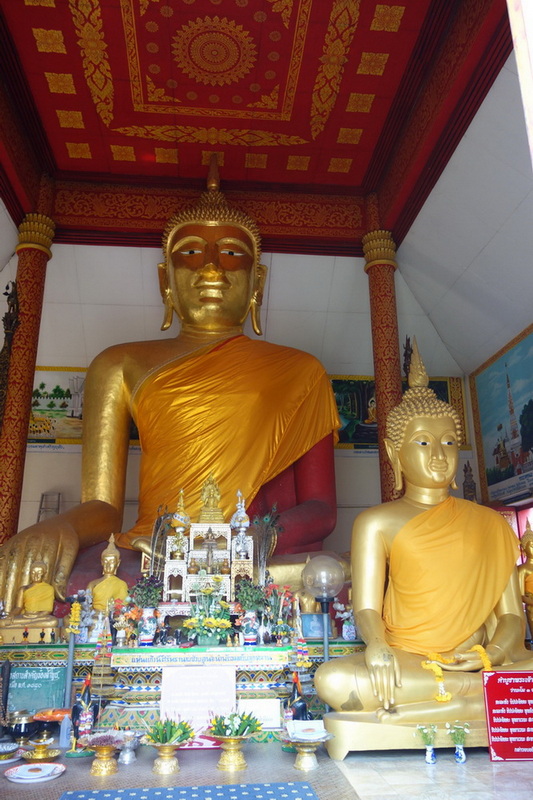
Visitors who arrive with time to observe will find that the temple rewards more than a quick look at the main chedi. Begin by taking in the overall arrangement of the complex, then move your attention toward the entrance details, roof decoration, image halls, and smaller architectural elements. The contrast between open courtyards and enclosed worship spaces helps explain how the temple accommodates both public ceremonies and quiet personal devotion.
The experience is particularly valuable for travelers interested in the connection between religion and regional identity. A shrine or image may carry meaning that is not immediately obvious to an outside observer, while a familiar architectural form may have been preserved because of its devotional importance. Reading available signs, observing how local worshippers behave, and allowing space for religious activities can make the visit more informed and respectful.
Practical preparation is mainly a matter of conduct rather than complicated planning. Dress modestly, covering shoulders and knees when entering worship areas, and remove shoes when local practice or signs request it. Speak quietly, avoid blocking ceremonies or prayer, and ask before photographing people. Images of monks, worshippers, and sacred objects deserve particular care. Visitors should also avoid climbing, touching, or leaning against architectural features unless clearly permitted.
There is no need to approach the temple as a performance or to imitate rituals without understanding them. A calm attitude is more appropriate. Those who wish to make an offering can observe local practice or seek discreet guidance, while those who prefer simply to look and learn can do so respectfully. The essential point is to remember that the temple continues to serve worshippers.
Placing Wat Hariphunchai in a Lamphun Visit
The importance of Phra That Hariphunchai Temple becomes clearer when it is considered alongside the wider historic character of Lamphun. The city is compact in feel compared with larger northern urban centres, yet its heritage is substantial. Religious monuments, references to the Hariphunchai kingdom, and stories associated with early rulers create a strong sense of place. A visit to the temple can therefore serve as an introduction before exploring other parts of the city.

For travelers building a cultural day around Lamphun Attractions, it is useful to vary the pace. The main temple offers a prominent and highly significant centre, while nearby monuments can provide different perspectives on the city’s past. One site may emphasize active worship, another may preserve architectural details, and another may connect visitors with historical figures and local memory. Together, they make Lamphun easier to understand than any single stop could do alone.
The temple is also a reminder that northern Thai heritage is not one simple visual category. Hariphunchai history, Lanna traditions, Buddhist practice, restoration, and contemporary community life overlap here. Visitors may see similarities with other northern temples, but the meaning of Wat Hariphunchai is rooted in Lamphun’s own historical story. This local context is what makes the complex especially worthwhile for culture-focused travelers.
How to Appreciate the Temple With Respect
A respectful visit begins with recognizing the difference between heritage tourism and ordinary sightseeing. The temple’s artistic features can be admired, photographed where allowed, and studied, but they remain part of a sacred environment. Visitors should follow posted instructions and local guidance, keep clear of restricted areas, and avoid treating religious objects as props for playful photographs.
It is also worth looking beyond the most visible golden surfaces. The temple’s significance lies in accumulated memory: traditions of veneration, stories connected with Hariphunchai, the work of generations of caretakers, and the continuing presence of the Buddhist community. Even a short visit can acknowledge this depth by moving patiently, speaking considerately, and leaving space for worshippers.
For anyone comparing the site with other Top Temples In Northern Thailand, the most useful comparison is not which temple is more impressive. Instead, consider how each place expresses its own history and community. At Phra That Hariphunchai Temple, the central stupa, historic setting, and active religious life combine to create an experience that is distinctly Lamphun.
Nearby Attractions
Wat San Pa Yang Luang
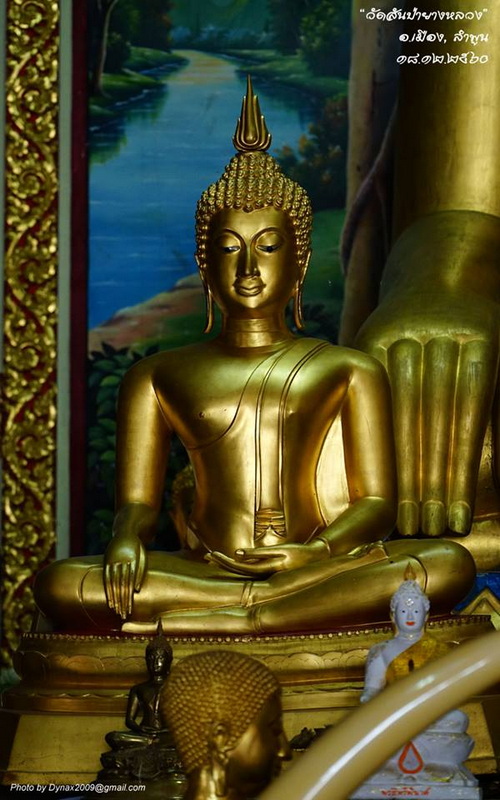
Wat San Pa Yang Luang offers another perspective on Lamphun’s religious and artistic heritage. Its significance is connected with the city’s long Buddhist tradition and the broader cultural history of the region. After visiting Wat Hariphunchai, travelers can use this nearby temple to notice how different compounds organize sacred space, display decorative work, and support local worship.
The visit is best approached with the same courtesy required at the principal temple. Observe the architecture without rushing, be aware of worshippers, and treat the grounds as an active religious place rather than simply a backdrop. Seen alongside Phrathat Hariphunchai Temple, Wat San Pa Yang Luang helps broaden an understanding of Lamphun’s network of historic temples.
Queen Cham Dhavi Monument
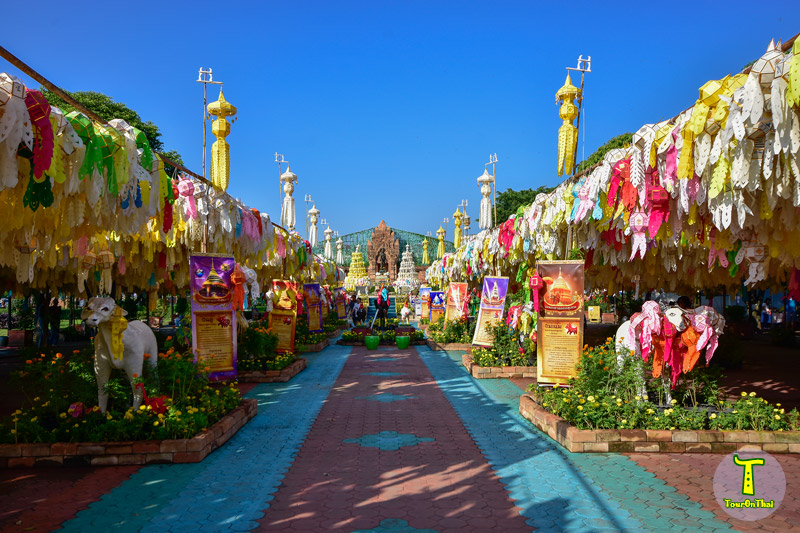
The Queen Cham Dhavi Monument provides a historical complement to Phra That Hariphunchai Temple. Queen Chamadevi is closely associated with the traditional history of Hariphunchai and with Lamphun’s early royal identity. The monument gives visitors an opportunity to reflect on the person remembered in local narratives and to connect the city’s religious heritage with its political and cultural beginnings.
This stop can be especially meaningful for travelers who have already encountered the temple’s connection with ancient Hariphunchai. Rather than presenting history as an isolated list of dates, the monument and temple together show how religious places, rulers, stories, and civic identity remain connected in the cultural landscape of Lamphun.
Final Thoughts
Phra That Hariphunchai Temple offers more than an impressive architectural subject. Its central stupa, layered history, and continuing religious role provide a thoughtful way to encounter Lamphun’s heritage. By pairing the temple with Wat San Pa Yang Luang and the Queen Cham Dhavi Monument, travelers can see how sacred tradition and historical memory shape the city together. A patient, considerate visit leaves room for both visual appreciation and cultural understanding, making Wat Hariphunchai a meaningful part of any northern Thailand journey.
