Buatong Field at Doi Mae U-Kor for Mae Hong Son Day Trips
A practical planning guide for seasonal landscapes, considerate group travel, and meaningful stops near Khun Yuam
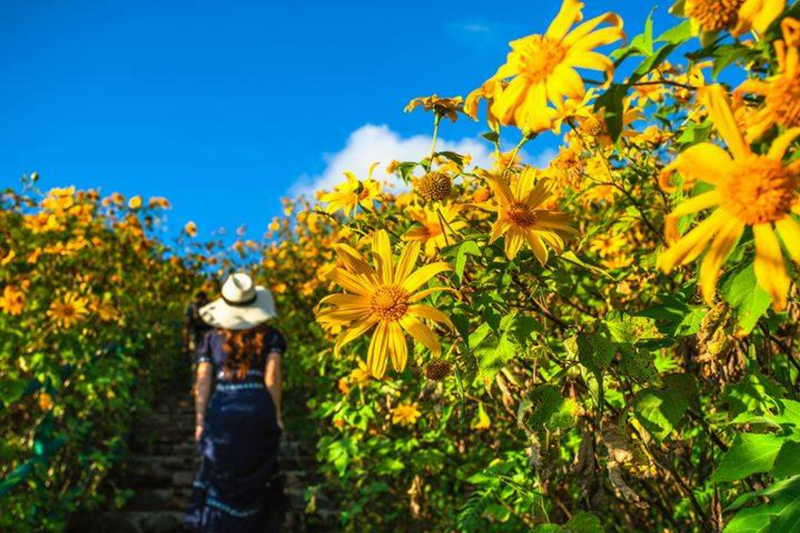
Buatong Field at Doi Mae U-Kor is a seasonal mountain landscape in Khun Yuam District, Mae Hong Son, known for broad slopes covered by yellow Mexican sunflower blooms during the flowering period. The scene is open rather than enclosed: visitors look across rolling highland terrain, changing light, and distant ridges, with the flowers creating a strong visual contrast against the green or muted colors of the surrounding hills. For travelers searching for a Mae Hong Son Day Trip From Chiang Mai, the first planning question is not simply whether the field is attractive. It is whether the available time, road journey, and group’s energy match a highland destination in another province. The route can make a same-day visit a demanding plan, so a careful itinerary should allow realistic travel time and avoid treating every stop as a quick photo opportunity. This guide approaches the field as a group-travel destination. It explains what to expect from the landscape, how to discuss a Chiang Mai Group Tour with a local agency or operator, and how nearby cultural and natural places can add variety without rushing through communities or fragile scenery.
What the mountain landscape offers
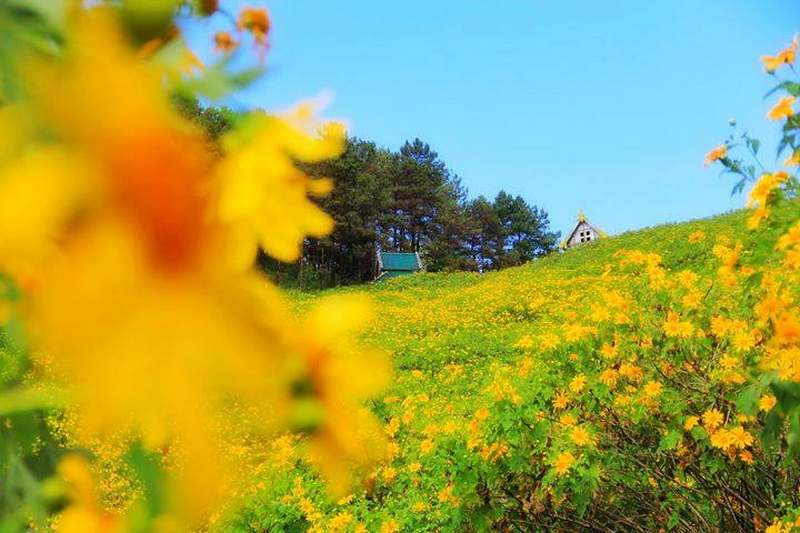
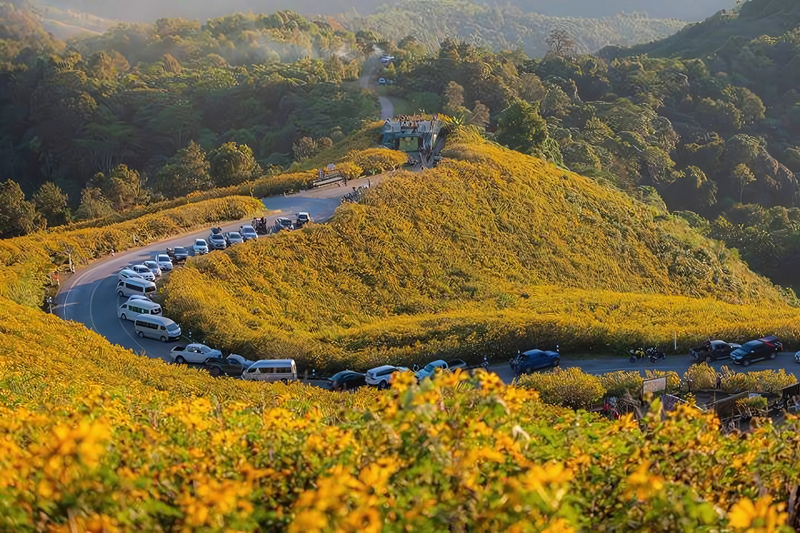
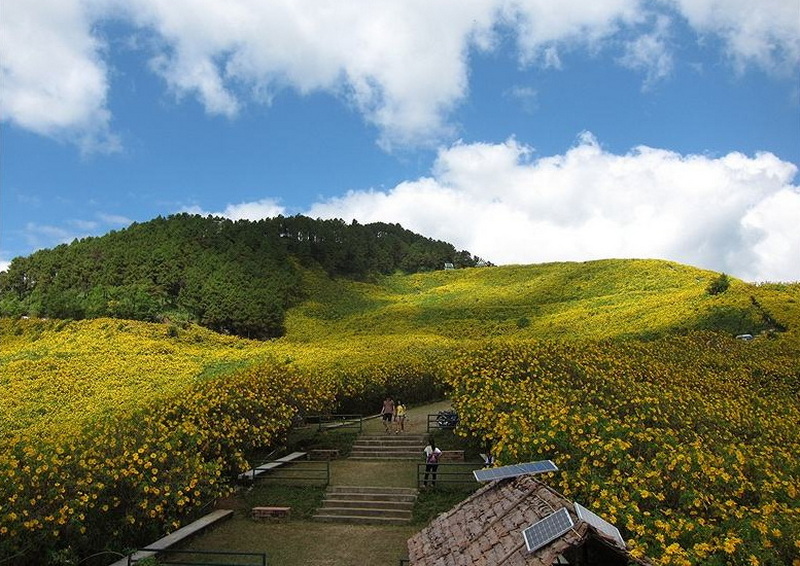
The defining feature of Buatong Field is its seasonal carpet of yellow blooms. The field is associated with Thung Bua Tong, a name commonly used for Mexican sunflower landscapes in northern Thailand. At Doi Mae U-Kor, the flowers spread across open hillsides and create a wide viewpoint rather than a single isolated landmark. The experience is therefore visual and spacious: the appeal lies in seeing the field as part of the mountain setting, not only in standing beside individual plants.
Seasonality matters. The strongest display is tied to the annual flowering period, while the landscape has a different character outside that window. Travelers should confirm current local conditions before committing to a flower-focused journey, because weather, timing, and natural growth cycles affect what visitors see. Avoiding guarantees about bloom coverage also helps set fair expectations for everyone in the group.
The highland setting may feel cooler or more exposed than Chiang Mai, particularly in the morning or when cloud and wind move across the ridges. Comfortable walking shoes, sun protection, water, and a light extra layer are sensible general preparations. Visitors should remain attentive to the surface underfoot and keep to appropriate viewing areas rather than stepping through planted sections for a closer photograph.
Photography works best when the group allows the landscape to lead. Wide views can communicate the scale of the field, while a few carefully framed details show the texture and color of the flowers. Quiet pauses also have value. A short visit does not need to become a race between viewpoints, especially when several people are sharing the same route and waiting for one another.
Planning the Chiang Mai connection
A Mae Hong Son Day Trip From Chiang Mai should be evaluated as a long-distance mountain outing rather than a nearby city excursion. Buatong Field at Doi Mae U-Kor lies in Khun Yuam District, Mae Hong Son, and reaching it from Chiang Mai involves substantial road travel through northern highland terrain. Curving roads, weather, traffic, and the number of planned stops can all influence how much time remains for the field itself.
For that reason, travelers should compare three realistic approaches: a tightly focused day journey, a broader Mae Hong Son route with more time available, or a trip that uses an overnight base in the province. The most suitable choice depends on the group’s tolerance for road time, mobility needs, preferred pace, and interest in nearby places. A responsible itinerary should state its travel demands clearly instead of presenting the field as an effortless quick stop.
When asking a Chiang Mai travel agency about options, provide the exact destination name and ask how the proposed route handles the field’s seasonal nature. It is useful to discuss departure timing in general terms, rest opportunities, road conditions, vehicle comfort, and what happens if weather affects the view. Rather than focusing only on the number of stops, ask whether the plan leaves enough time for safe movement and respectful visits.
Travelers should also check current local information before departure. Road access, viewing arrangements, local conditions, and seasonal visitor patterns can change, and this article does not provide fixed schedules or access rules. If the journey becomes too compressed, dropping a stop is usually more sensible than encouraging a driver or group to hurry through mountain roads.
Making a group tour work well
A Chiang Mai Group Tour can make a destination like this easier to coordinate because transport decisions, route planning, and shared timing are discussed in advance. It can also introduce practical compromises. One traveler may want extended photography time, another may prefer a short viewpoint visit, and someone else may need more frequent breaks during the drive. Good group planning treats these differences as normal rather than allowing the fastest walkers to set the pace for everyone.
Before joining or arranging a group outing, clarify the group size, general travel style, amount of walking, flexibility around stops, and the method used to communicate changes. Exact inclusions should come from the provider, not from assumptions. A small group may allow more discussion and flexibility, while a larger group may offer social energy but require stricter meeting points and patience when people gather.
A simple shared agreement can prevent tension. The group might decide to meet at a clearly identified place after a viewing period, keep valuables with each person, and notify the leader before moving away from the main party. Members should also respect differences in age, mobility, language, and photography preferences. Nobody should be pressured to climb, pose, or enter an area that feels unsafe.
Group travel is particularly valuable when it encourages context rather than only movement. A knowledgeable local guide or coordinator may help explain the landscape and advise visitors about appropriate behavior, but travelers should still listen carefully and avoid assuming that a brief stop represents an entire community. Ask permission before photographing people, homes, or personal activities, and keep conversations polite when visiting areas connected with local residents.
A considerate way to experience Doi Mae U Kor
The name Doi Mae U Kor is sometimes written as Doi Mae U Kor, Doi Mae U-Kor, or Doi Mae U-Kho in travel material. These variations can help when searching for maps and local information, but the important planning detail is the destination’s location in Khun Yuam District. Confirm that a booking or route description refers to the same flowering field before setting out, particularly when several mountain viewpoints are mentioned together.
The field is a living landscape, not a stage arranged for visitors. Stay on established paths or designated viewing areas where applicable, avoid picking flowers, and do not leave food packaging behind. Drones, loud music, and large group behavior can affect other visitors and nearby residents, so any activity that requires permission should be checked locally. These choices protect the setting and make the visit more comfortable for people who have come for a quiet mountain experience.
Respect also applies to cultural encounters around the district. Nearby communities may have their own routines, beliefs, and expectations about photography or visitor behavior. Do not reduce local people to a scenic backdrop or assume that clothing, language, or household spaces are public attractions. A greeting, a request for consent, and willingness to follow local guidance are more appropriate than trying to create a dramatic encounter.
For a group, the most useful preparation is shared awareness. Brief everyone before arrival about litter, photography, walking boundaries, and meeting arrangements. This avoids putting all responsibility on one guide and helps each traveler contribute to a low-impact visit. The result is a more attentive experience of the flowers, the hills, and the communities connected with the wider landscape.
Nearby Attractions
Hmong Microwave Village
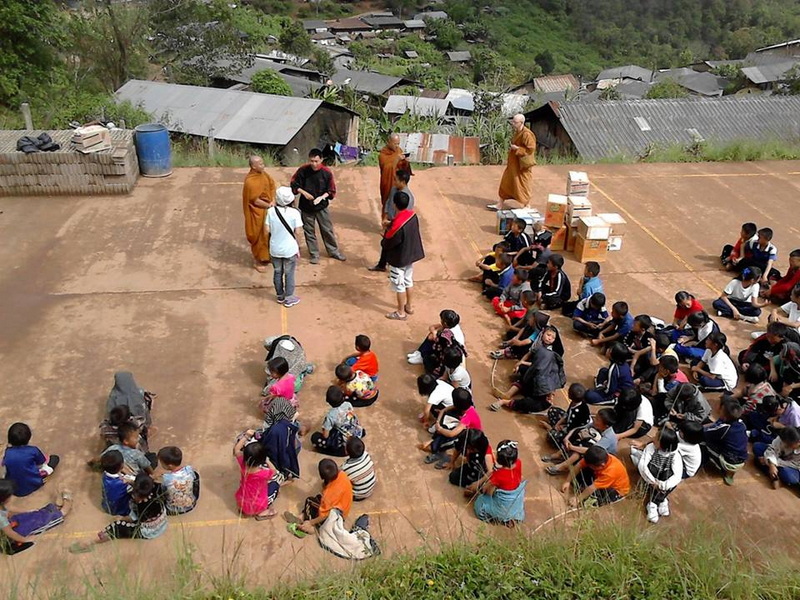
Hmong Microwave Village can add a cultural dimension to a route that otherwise centers on scenery. The name should not be treated as an invitation to observe residents as a spectacle. Travelers should approach with courtesy, follow any local guidance, and remember that a village is a lived community rather than a themed display. Ask before photographing people or private spaces, and give residents room to continue their daily activities.
For group planners, this stop works best when the visit is framed around listening and respectful observation. Keep explanations factual, avoid broad claims about all Hmong communities, and recognize that one village cannot represent every family or tradition. A considerate group also avoids blocking paths, entering homes without invitation, or turning personal interactions into entertainment. These habits make the cultural part of the journey more dignified and mutually comfortable.
Phu Chi Per
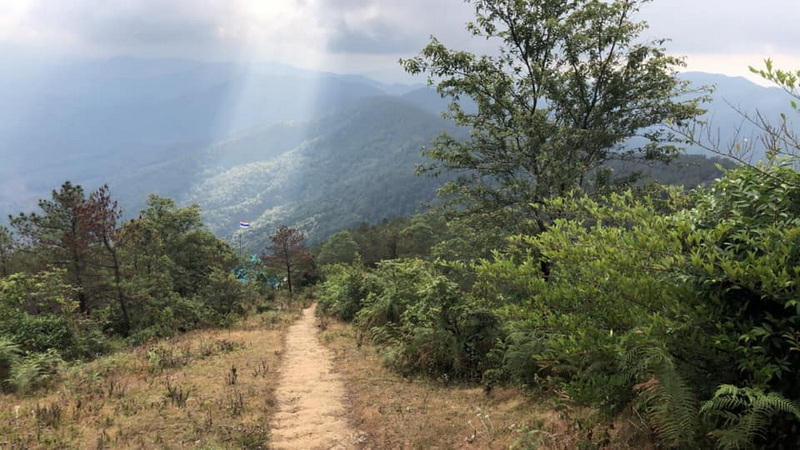
Phu Chi Per offers another way to think about the highland environment near the Buatong Field route. Its appeal is connected with elevated scenery and the changing relationship between ridges, sky, and surrounding valleys. The exact experience can depend on weather and local conditions, so it is better to treat the site as a complementary landscape stop than to promise a particular view.
Adding Phu Chi Per requires honest time planning. In a day trip, the group should decide whether a second viewpoint adds more value than a slower visit to the flower field. In a longer route, the contrast between a flower-covered slope and a broader mountain outlook can create a more balanced day. As always, follow current local guidance, keep the area clean, and allow the group to move at a safe and comfortable pace.
Final Thoughts
Buatong Field at Doi Mae U-Kor rewards preparation more than haste. Its seasonal blooms, open mountain setting, and connection with Khun Yuam District make it a memorable focus for travelers who plan around reality rather than promises. A day trip from Chiang Mai may suit some groups, while others will enjoy the destination more as part of a longer Mae Hong Son journey. Whichever format you choose, confirm current conditions, discuss travel demands clearly, and treat nearby communities and landscapes with care. That combination gives a group the best chance of enjoying the view without overwhelming the place.
